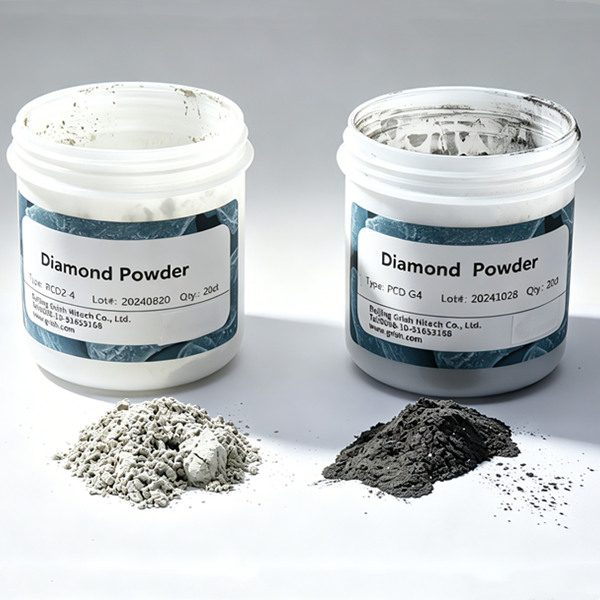
Choosing between diamond lapping slurry and colloidal silica slurry depends on the workpiece material, required material removal rate (MRR), surface finish and polishing stage.
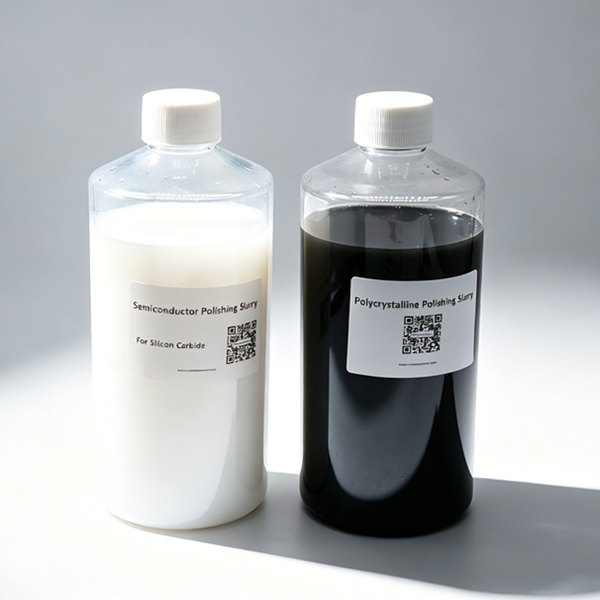
Although both are abrasive-based polishing consumables, they are not interchangeable. Diamond abrasives provide strong mechanical cutting action and are widely used for hard and brittle materials, while colloidal silica is widely used in precision polishing and chemical mechanical polishing (CMP), where surface quality, planarization and defect control are critical.
This guide compares diamond slurry and colloidal silica slurry and explains how to select the appropriate slurry for SiC, silicon wafers and other precision polishing applications.
Diamond Lapping Slurry vs. Colloidal Silica: Key Differences
The most important difference is the abrasive itself. Diamond and silica have significantly different hardness and polishing behavior, which affects material removal and achievable surface quality.
| Property |
Diamond Lapping Slurry |
Colloidal Silica Slurry |
| Abrasive |
Diamond |
Silicon dioxide (SiO₂) |
| Relative hardness |
Diamond is Mohs 10 |
Silica is substantially softer than diamond |
| Primary action |
Strong mechanical material removal |
Fine abrasive action combined with chemical-mechanical effects in CMP |
| Typical application focus |
Hard materials, lapping and rough-to-fine polishing |
Precision polishing and semiconductor CMP |
| Main advantage |
High cutting capability |
Surface finish, planarization and defect control |
| Typical materials |
SiC, ceramics, sapphire, hard metals and other hard materials |
Silicon wafers, dielectric materials and selected semiconductor surfaces |
Diamond is the hardest mineral on the Mohs scale, with a hardness of 10. Quartz, which has the same Mohs hardness as silica in its crystalline form, is rated at 7. This large difference in hardness helps explain why diamond abrasives are particularly useful when strong mechanical removal is required.
For CMP, however, abrasive hardness is only one factor. Particle size distribution, abrasive concentration, chemical additives, pH, pad properties and polishing parameters can all affect material removal rate and surface quality. Recent reviews of semiconductor CMP emphasize that abrasive selection must be considered together with the chemical and mechanical components of the process.
When Should You Use Diamond Lapping Slurry?
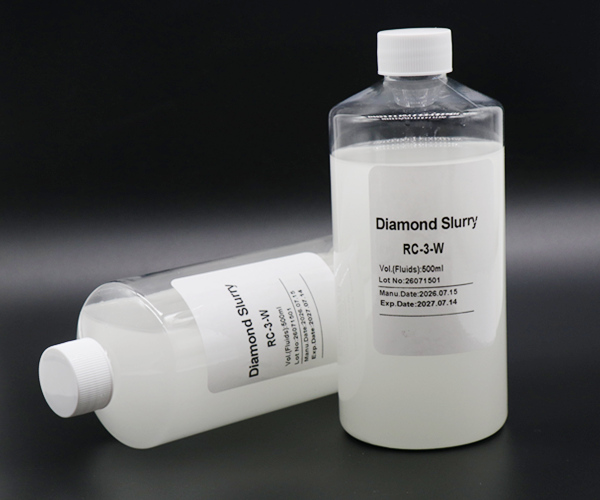
Diamond lapping slurry is generally considered when the process requires efficient mechanical removal of hard or brittle materials.
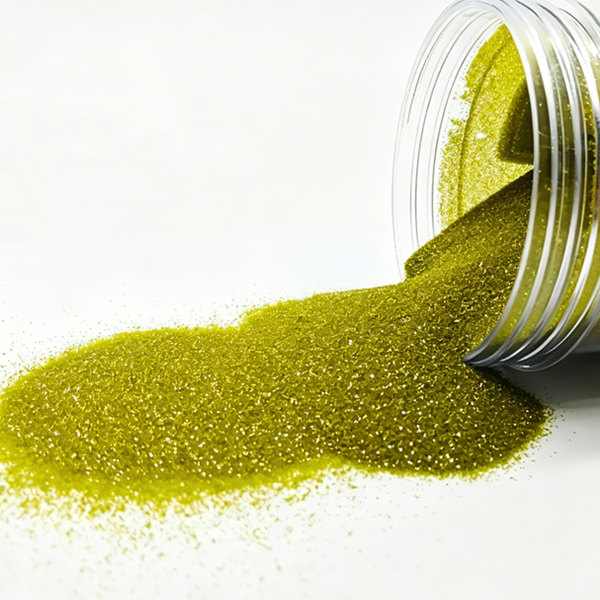
Diamond abrasive can be supplied in different particle sizes to match different stages of lapping and polishing. Coarser diamond particles are normally selected when higher material removal is required, while finer diamond particles can be used for subsequent finishing steps.
Research on water-based diamond abrasive polishing has demonstrated the use of 3 μm and 1 μm diamond slurries for polishing SiC and ceramic materials, with polishing performance affected by both abrasive size and applied load.
Diamond Slurry for SiC Wafer Polishing
Silicon carbide is a hard and chemically inert semiconductor material, making efficient surface processing challenging. Diamond abrasives are therefore widely investigated for the mechanical removal of SiC.
A 2024 study on single-crystal SiC CMP using agglomerated diamond abrasives reported an MRR of 36.26 μm/h under its specific experimental conditions, using 7–10 μm primary diamond abrasive particles and a polishing pressure of 27.6 kPa. This result demonstrates the potential of diamond abrasives for high-efficiency SiC material removal, although actual performance depends strongly on the abrasive system and process parameters.
Diamond slurry can therefore be considered for applications such as:
- SiC substrate lapping and rough polishing
- Hard and brittle ceramic polishing
- Sapphire and other hard crystal materials
- Precision polishing where mechanical material removal is required
- Pre-polishing before a finer finishing process
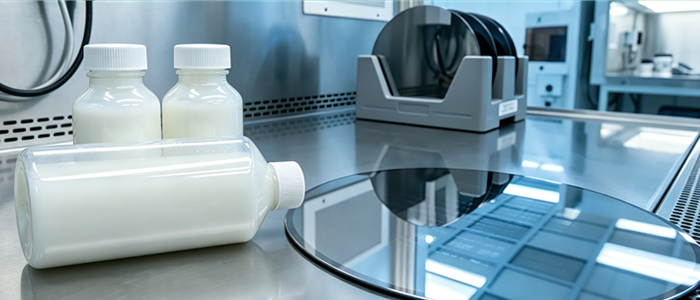
When Should You Use Colloidal Silica Slurry?
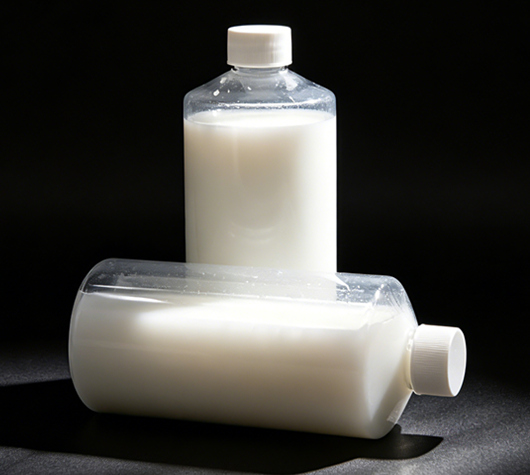
Colloidal silica slurry is widely used in semiconductor polishing because its fine and relatively soft SiO₂ particles can provide controlled abrasive action while working together with the chemical component of a CMP process.
Colloidal silica is widely used for silicon wafer polishing, and research has shown that abrasive particle size and dispersion strongly influence polishing performance. In one study, uniformly dispersed 32–36 nm silica particles were used in a silicon wafer CMP slurry, with slurry chemistry affecting both material removal rate and surface quality.
The control of particle size and agglomeration is particularly important in precision polishing. Large abrasive agglomerates can become a source of surface scratches and defects, which is why slurry dispersion and stability are important considerations when selecting a colloidal silica slurry.
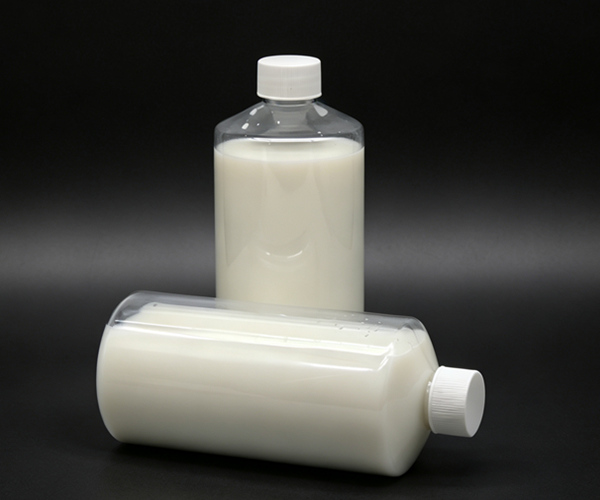
Colloidal Silica for Silicon Wafer CMP
For silicon wafer CMP, the objective is not simply to maximize material removal. Global planarization, surface roughness and defect density are also critical process requirements.
Reviews of silicon wafer polishing describe CMP as a key process for achieving high-quality wafer surfaces and global planarization. Abrasive particles, polishing pads and chemical reagents all contribute to the material removal mechanism.
Colloidal silica is therefore commonly considered when the process requires:
- Fine surface finishing
- Wafer planarization
- Low surface defect levels
- Controlled material removal
- Semiconductor CMP processing
Diamond Slurry vs. Silica Slurry for SiC
SiC is an important example where the choice between diamond and silica cannot be reduced to a simple “diamond versus silica” rule.
Diamond provides strong mechanical abrasive action and can be used for efficient removal of hard SiC material. Colloidal silica, on the other hand, is widely investigated for the later stages of SiC CMP because of its ability to support fine surface finishing and chemical-mechanical material removal.
Published research has also investigated mixed abrasive slurry containing both nano-diamond and colloidal silica. One study reported that combining the two abrasive types can provide a hybrid removal mechanism for single-crystal SiC, with the diamond and silica abrasives contributing differently to the polishing process.
This means that a SiC polishing process may use different abrasive systems at different stages rather than relying on one slurry for the entire process.
| SiC Processing Requirement |
Potential Slurry Direction |
| High material removal / damage-layer removal |
Diamond abrasive slurry |
| Fine polishing |
Fine diamond or silica-based system depending on process |
| Ultra-fine surface finishing |
Colloidal silica or mixed-abrasive system |
| Need to balance MRR and surface quality |
Consider a multi-step or mixed-abrasive process |
Diamond Slurry vs. Colloidal Silica for Silicon Wafers
For conventional silicon wafer polishing and semiconductor CMP, colloidal silica is an important abrasive system because the process requires more than mechanical stock removal.
The CMP mechanism involves the interaction between the wafer surface, chemical environment, abrasive particles and polishing pad. Changes in abrasive concentration, particle size, pH and chemical additives can significantly change the material removal rate and surface condition.
Diamond slurry can still be useful in earlier mechanical processing or applications where stronger abrasive action is required, but it should not automatically be treated as a substitute for a formulated colloidal silica CMP slurry.
What Should You Consider When Choosing a Polishing Slurry?
Choosing the right slurry requires more than selecting the hardest abrasive. A practical evaluation should consider the following parameters.
1. Workpiece Material
Start with the material being processed. SiC, sapphire, ceramics, silicon, metals and optical materials have different mechanical and chemical characteristics and therefore require different abrasive systems.
2. Polishing Stage
Determine whether the slurry will be used for lapping, rough polishing, fine polishing or final CMP. A slurry designed for rapid material removal may not be appropriate for the final surface-finishing step.
3. Abrasive Particle Size
Particle size has a direct influence on polishing behavior. Research on SiC and silicon wafer polishing demonstrates that abrasive size can affect both material removal rate and final surface quality.
4. Abrasive Concentration
Increasing abrasive concentration does not automatically guarantee better polishing performance. The relationship between abrasive concentration, MRR, surface roughness and defect formation depends on the workpiece and process conditions.
5. Slurry Dispersion and Stability
For fine polishing, abrasive agglomeration can create unwanted scratches or defects. Stable dispersion and controlled particle-size distribution are therefore important when evaluating a polishing slurry supplier.
6. Required Surface Finish
If the primary requirement is fast material removal, a diamond abrasive system may be more appropriate. If the final requirement is ultra-fine surface finishing and planarization, a colloidal silica-based CMP system may be more suitable.
Diamond Lapping Slurry or Colloidal Silica: Which One Is Right for Your Process?
The answer depends on your process objective rather than simply the abrasive type.
| Your Main Requirement |
Starting Point |
| High mechanical removal of hard materials |
Diamond lapping slurry |
| SiC rough lapping or pre-polishing |
Diamond slurry |
| Silicon wafer CMP |
Colloidal silica slurry |
| Ultra-fine semiconductor surface finishing |
Colloidal silica-based CMP slurry |
| Balance between SiC removal rate and surface quality |
Diamond + silica / multi-step process |
For this reason, slurry selection should be based on the material, target removal rate, surface roughness requirement, polishing pad, machine parameters and process stage.
Why Work With a Polishing Slurry Manufacturer?
A polishing slurry is not simply an abrasive powder mixed with water. The abrasive type, particle size distribution, concentration, dispersion stability and chemical formulation can all influence polishing performance.
For industrial applications, slurry selection is often more effective when the supplier evaluates the customer’s actual workpiece and polishing process rather than recommending a generic product based only on material name.
As a polishing slurry manufacturer, we can support the selection of abrasive type and particle size according to the material, polishing stage and required surface finish. For diamond slurry and silica-based polishing systems, process-specific evaluation can help determine a more suitable formulation.
Looking for diamond lapping slurry or colloidal silica polishing slurry for your application? Contact us with your workpiece material, current polishing process, abrasive size, target surface roughness and required removal rate. Our technical team can recommend a suitable slurry solution for evaluation.

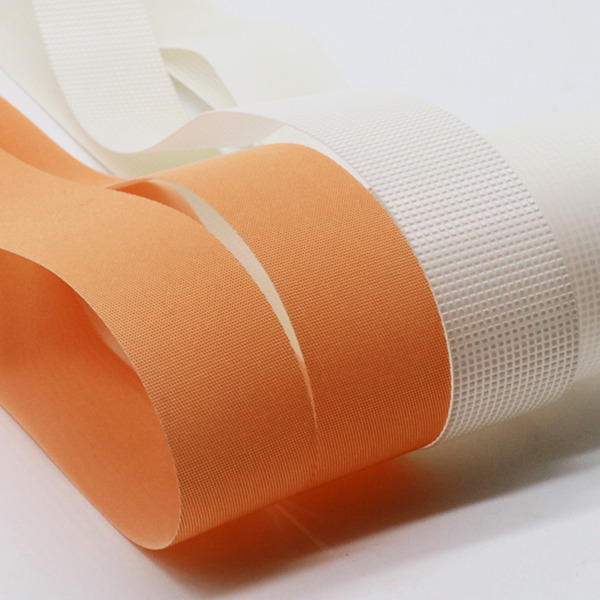 3D Structured Film (Cleaning belt for LCD panels)Flocked Pile Polishing Film for Roller Finishing and LCD Wiping
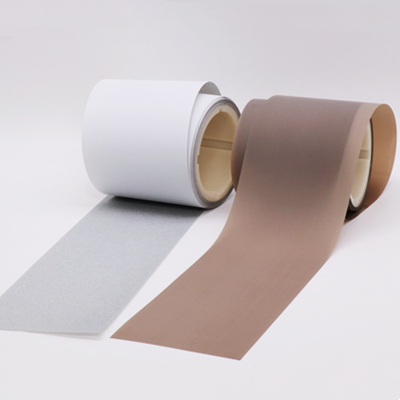 Polishing tape for repair defects and flatten protrusion points in LCD color filter process
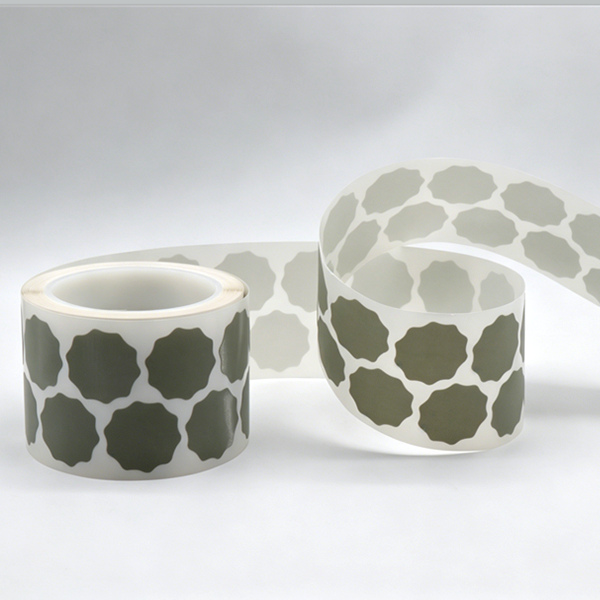 PSA Film Disc Roll for Fine Sanding and Finish of Automotive Coatings
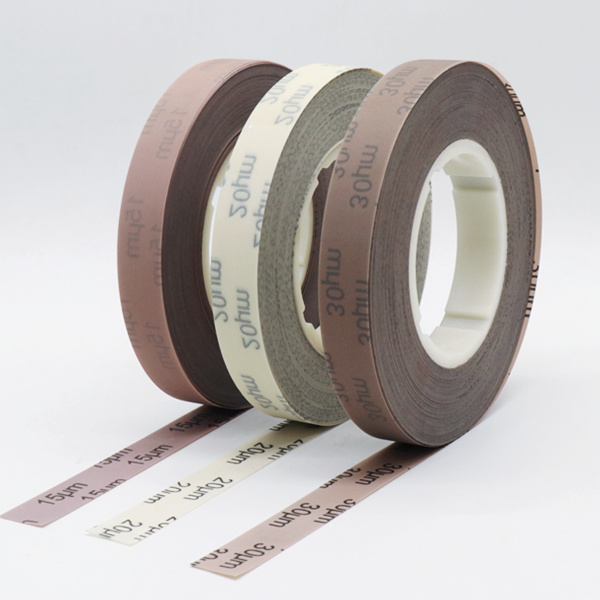 Electrostatic Coated Microfinishing Film Roll for Ultra-Fine Surface Finishing
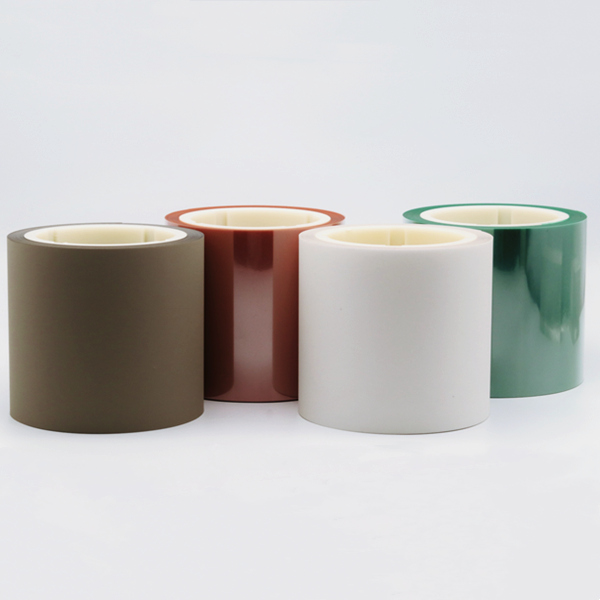 Precision Coated Diamond Roll for Fiber Optic & Microfinishing